






Learn how to build a good crypto portfolio and how diversification helps offset losses and maintain stability.
Information current as of April 2024.
Given the wild ups and downs of the crypto market, the formula for long-term success lies in crafting a well-diversified crypto assets portfolio.
Diversification isn’t merely about accumulating a random bunch of coins. It requires carefully spreading your investments across a variety of digital assets, each serving a unique purpose and positioned within distinct sectors of the crypto market.
The idea behind this is simple yet profound: cryptocurrencies are renowned for their wild price swings. Take Bitcoin (BTC), for instance. Its value can surge to unprecedented heights one moment and plummet just as swiftly the next.
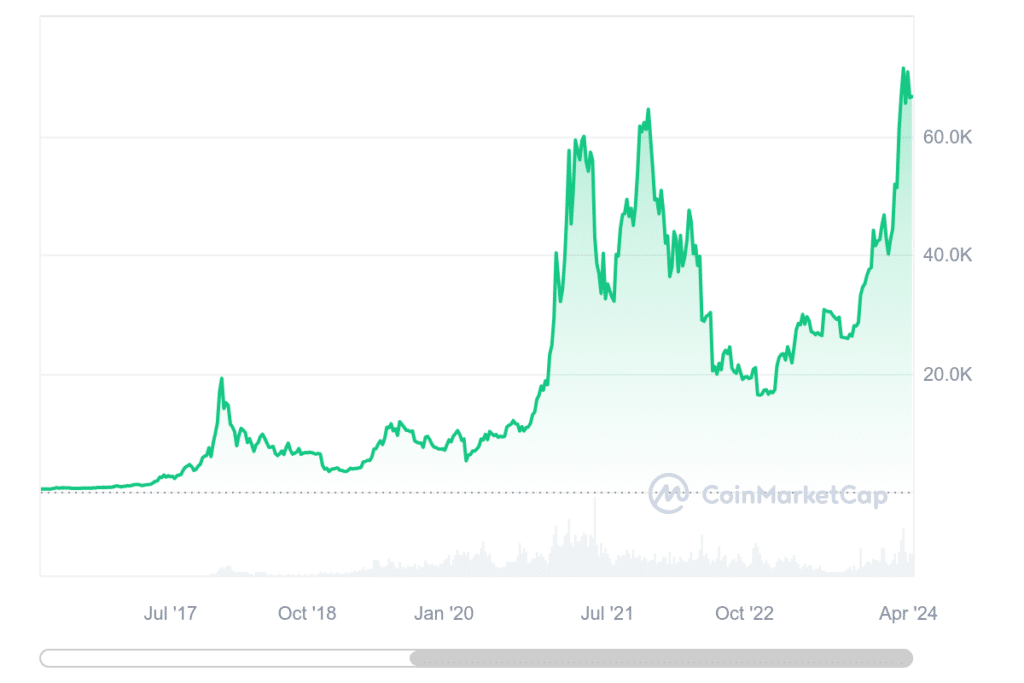
By diversifying, you can mitigate these risks. Rather than banking everything on one volatile asset, you allocate your funds across various assets with different market behaviors.
When one asset experiences a downturn, others may be on the rise, helping to offset losses and maintain stability across your cryptocurrency portfolio.
However, while diversification reduces risk, it can also moderate potential returns, particularly from high-performing assets.
This means you must find a delicate balance between risk management and profit potential, aligning your crypto portfolio with your investment objectives and risk tolerance.
Let’s delve deeper into this and uncover the nitty-gritty of what a cryptocurrency portfolio is and how to build a diversified one.
What is a crypto portfolio?
A crypto portfolio is a collection of digital assets held by an investor. It serves to manage and optimize investments in the volatile crypto market.
Unlike traditional portfolios, crypto portfolios primarily consist of various cryptocurrencies, tokens, NFTs, and other digital assets.
These assets can include well-known cryptocurrencies like Bitcoin and Ethereum (ETH), as well as alternative coins (altcoins) and tokens representing specific projects or platforms.
The key to building a crypto portfolio lies in diversification. But what does diversification mean in the context of cryptocurrency investments? Let’s break it down.
Practical strategies for how to diversify a crypto portfolio
Let’s delve into practical strategies to help you effectively diversify your holdings.
Allocate across different cryptocurrency categories
Apart from investing in Bitcoin or Ethereum (ETH), consider diversifying your crypto portfolio through different categories of cryptocurrencies. These categories may include:
- Large-cap coins: These are established cryptocurrencies with large market capitalizations. Examples include Solana (SOL), Binance Coin (BNB).
- Mid-cap coins: These are cryptocurrencies with moderate market capitalizations, offering potential for growth. Examples are Render (RNDR) and Maker (MKR).
- Small-cap coins: These are relatively new or lesser-known cryptocurrencies with smaller market capitalizations, often associated with higher risk but also higher potential returns. Some of the examples are Worldcoin (WLD) and Ronin (RON).
- Emerging coins: Emerging coins typically represent novel technologies or concepts within the blockchain space, but they also carry the highest risk out of all the aforementioned categories.
By diversifying your cryptocurrency portfolio across these categories, you spread your risk and tap into various segments of the crypto market.
Consider different use cases and industries
Cryptocurrencies serve diverse purposes beyond just being a store of value or a medium of exchange. Some focus on decentralized finance (defi), while others target specific industries like gaming or supply chain management. For instance:
- Defi: Defi has emerged as one of the fastest-growing crypto sectors, offering decentralized alternatives to traditional financial services. Examples include decentralized exchanges (DEXs) like Uniswap (UNI) and yield farming protocols such as Yearn.Finance (YFI).
- Smart contract platforms (L1): Smart contract platforms enable developers to build decentralized applications (dapps) and execute self-executing contracts. Ethereum pioneered this concept, but other platforms have emerged to offer scalability and interoperability features. Examples: Cardano (ADA), Binance Smart Chain, Solana, etc.
- Gaming and virtual assets: With the rise of blockchain, gaming and virtual asset ownership have become increasingly popular. NFTs represent unique digital assets, including digital art, collectibles, and in-game items. Examples: Axie Infinity (AXS), Decentraland (MANA), Enjin Coin (ENJ), etc.
- Supply chain and logistics: Blockchain has also expanded itself to areas of supply chain management by enhancing transparency, traceability, and efficiency. Cryptocurrencies focusing on supply chain solutions aim to streamline processes and reduce fraud. One of the examples is VeChain (VET).
- Artificial intelligence (AI) and machine learning (ML): Cryptocurrencies and blockchain technology are increasingly intersecting with AI and ML applications. Projects in this category leverage decentralized networks to enhance data privacy, facilitate data sharing, and incentivize AI model training. Some of the examples are SingularityNET (AGIX) and Fetch.ai (FET).
- Layer 2 (L2) scaling solutions: Scalability remains a key challenge for blockchain networks in terms of transaction throughput and cost efficiency. Layer 2 scaling solutions aim to address these issues by building protocols that operate on top of existing blockchains, improving performance without compromising security. Examples include Polygon (MATIC), Optimism (OP), and Arbitrum (ARB).
Remember, the blockchain and crypto space is vast, with numerous sectors and industries beyond what we’ve covered here.
It’s essential to conduct your own thorough analysis and research to identify the sectors and projects that align best with your investment goals and understanding to be included in your cryptocurrency portfolio.
Geographical diversity
Consider diversifying your crypto portfolio geographically by investing in cryptocurrencies from different regions. Each region may have its own regulatory environment, market dynamics, and adoption rates. For example:
- North American projects: Solana, Ripple (XRP), etc.
- Asian projects: Examples include Binance Coin and Tron (TRX).
- European projects: Polkadot (DOT), Tezos (XTZ), etc.
By diversifying geographically, you mitigate risks associated with regulatory changes or geopolitical events impacting specific regions.
Stablecoins, hedging, and regular rebalancing
Including stablecoins like Tether (USDT) or USD Coin (USDC) in your cryptocurrency portfolio can provide stability during times of market volatility.
Additionally, hedging strategies such as using derivatives or options can help mitigate downside risk while still allowing for potential upside gains. But remember that options trading is very high-risk and you need to have a clear approach before trading them.
Periodically review and rebalance your crypto portfolio to maintain your desired allocation across different assets.
As certain assets may outperform or underperform over time, rebalancing ensures that your cryptocurrency portfolio remains aligned with your investment objectives.
What is a good crypto portfolio?
Before diving into the specifics of what constitutes a good crypto portfolio, it’s crucial to understand that there’s no one-size-fits-all solution.
Your cryptocurrency portfolio’s composition should align with your investment goals, risk tolerance, and financial situation. Let’s explore the characteristics of high-risk, moderate-risk, and low-risk portfolios.
High-risk portfolio
A high-risk portfolio typically consists of a higher proportion of emerging and low-cap coins, which have the potential for significant gains but also carry substantial volatility.
This portfolio is suited for investors with a high-risk tolerance and a long-term investment horizon.
Examples of assets that might feature in a high-risk portfolio include newly launched tokens or innovative blockchain projects with promising technology but unproven track records.
Here is a snapshot of a high-risk portfolio:
| Asset Category | Percentage Allocation Range |
| BTC and ETH | 15-20% |
| Large cap coins | 15-20% |
| Medium cap coins | 15-25% |
| Low-cap coins | 25-30% |
| Emerging coins | 30-40% |
Moderate-risk portfolio
A moderate-risk portfolio strikes a balance between risk and stability. It typically consists of a mix of large-cap, medium-cap, and some low-cap coins, with a lesser allocation to emerging coins.
This portfolio suits investors seeking moderate growth potential with relatively lower volatility.
Assets like BTC and ETH are staples in moderate-risk portfolios due to their established market presence and relatively lower volatility compared to smaller altcoins.
Here is a snapshot of a medium-risk portfolio:
| Asset Category | Percentage Allocation Range |
| BTC and ETH | 40-50% |
| Large cap coins | 30-40% |
| Medium cap coins | 20-30% |
| Low-cap coins | 5-15% |
| Emerging coins | 5-10% |
Low-risk portfolio
A low-risk portfolio prioritizes stability and capital preservation over high returns. It predominantly consists of large-cap coins, with minimal exposure to medium-cap, low-cap, or emerging coins.
This portfolio is ideal for conservative investors or those nearing retirement who prioritize safeguarding their investments.
Examples of assets in a low-risk portfolio include high exposure to BTC, ETH, and other established cryptocurrencies with a solid track record and widespread adoption.
Here is a snapshot of a low-risk portfolio:
| Asset Category | Percentage Allocation Range |
| BTC and ETH | 50-60% |
| Large cap coins | 30-40% |
| Medium cap coins | 10-20% |
| Low-cap coins | 0-10% |
| Emerging coins | 0-5% |
Conclusion
In the volatile world of cryptocurrencies, crafting a resilient crypto portfolio hinges on strategic diversification. Whether you like taking risks or playing it safe, make sure your investments match how much risk you’re comfortable with and what you want to achieve. Keep up with the latest news, spread your investments, and stay resilient. And always remember the most important rule: only invest money you can afford to lose.
Disclosure: This article does not represent investment advice. The content and materials featured on this page are for educational purposes only.