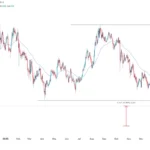






For most of the past two years, crypto had a retail problem. The everyday investors who drove the manias of 2017 and 2021 had mostly gone quiet, and the market became dominated by institutions, ETFs, and large funds, a more mature but less frenzied environment.
Summary
- Bitcoin search interest reached 12-month highs, confirming that retail attention has returned during the 2026 volatility.
- Fear-driven searches do not prove new buying, and on-chain data shows small holders continuing to sell.
- Whales accumulated while retail capitulated and spot Bitcoin ETFs recorded a prolonged outflow streak.
- A genuine retail comeback requires small-holder accumulation, new deposits, stronger retail volume, and SOPR above 1.
Then, in the volatility of early-to-mid 2026, something shifted.
Google searches for Bitcoin spiked to 12-month highs during the February sell-off, hitting the maximum score of 100 on Google Trends, and surged again through the June crash. Searches for “Bitcoin to zero” hit record levels.
Analysts, including the head of Europe at a major crypto asset manager, began saying the words the market had not heard in a while: “Retail is coming back.”
The search data is unambiguous that retail attention has returned. But attention is not the same as participation, and a spike in fearful Googling during a crash is a very different signal from a wave of new buyers.
This piece examines what the search data actually shows, whether the renewed attention is translating into real participation, what the on-chain data reveals about who is actually buying and selling, and what it would mean for the market if retail truly returns.
What the search data shows
Start with the raw signal, because the search data is the clearest evidence that retail attention has really returned after a long absence.
The numbers are striking.
Global search interest for Bitcoin reached a 12-month peak during the week beginning February 1, 2026, hitting a score of 100, the highest possible level on Google Trends’ relative scale, indicating a sharp resurgence in public attention.
That February spike tracked Bitcoin’s violent price swing, as it fell from around $81,500 to nearly $60,000 within five days.
The previous major peak had been in November 2025, when Bitcoin slipped below the psychological $100,000 level and search interest hit a score of 95.
Then the June 2026 crash drove another surge, including the record-breaking spike in “Bitcoin to zero” searches.
After a year of declining search volumes through much of 2025, the pattern of 2026 is unmistakable: retail attention, measured by search behavior, has come roaring back.
The interpretation from market observers has been consistent.
Analysts read the renewed search activity as a signal that retail investors are re-entering the crypto conversation, with the head of Europe at the asset manager Bitwise suggesting the data indicates “retail is coming back” as investors evaluate potential dip-buying opportunities.
The logic is that retail interest tends to fade when institutions dominate and the market goes quiet, and to surge when volatility and media coverage pull smaller traders back in.
The sharp price swings of 2026 and the accompanying news cycle are exactly the conditions that historically draw retail attention, and the search data confirms it is working.
But here is the crucial nuance embedded in the data, and it is what separates a careful reading from a naive one.
The search spikes have coincided with sell-offs and fear, not rallies and greed.
The February peak came during a crash, the June surge came during another crash, and the record “Bitcoin to zero” searches are fear queries by definition.
This matters enormously because it changes what the returning attention might mean.
Retail attention returning during euphoria, with searches for “how to buy Bitcoin” spiking as prices soar, is a classic late-bull-market signal.
Retail attention returning during fear, with searches for “Bitcoin to zero” spiking as prices crash, is something else entirely, potentially a capitulation or bottoming signal.
The Fear and Greed Index buried in extreme fear reinforces the argument that much of the attention is being driven by anxiety rather than enthusiasm.
The search data shows retail is paying attention again. It does not, by itself, show whether they are coming back to buy or to panic.
Attention is not participation
The single most important distinction in reading the “retail is back” narrative is between attention and participation, because they are not the same thing, and conflating them leads to wrong conclusions.
Search interest measures attention: how many people are thinking about, worrying about, or curious about Bitcoin.
It is a real and meaningful signal, but it is upstream of action.
A person who searches “Bitcoin to zero” is paying attention, but they might be a frightened holder considering selling, a curious onlooker with no intention of buying, a journalist researching a story, or a bargain hunter evaluating an entry.
The search itself does not tell you which.
Attention is the necessary first step toward participation, because people have to be paying attention before they act, but it is not participation itself, and a spike in attention can precede buying, selling, or nothing at all.
The reaction to Ethereum’s drop below $2,000 illustrates that ambiguity. Retail traders showed “buy the dip” interest, but sentiment and social activity still do not establish how much new capital was actually deployed.
Participation means actual capital flowing into or out of the market: new accounts being opened, deposits being made, and coins being bought and held.
This is what actually moves the market and what “retail coming back” would need to mean to matter for price.
Here the picture is far less clear than the search data alone suggests.
A surge in fearful search interest during a crash is entirely consistent with retail attention returning while retail capital continues to flee, with frightened holders Googling their fears on the way to selling instead of buying.
The search spike confirms the attention. It does not confirm the buying.
Centralized-exchange activity adds another warning against declaring a full retail return. Spot volume fell to its lowest level since October 2023, suggesting that renewed search interest had not yet translated into broad trading participation.
To know whether attention is converting into participation, and in which direction, it is necessary to look past the search data to the on-chain and flow data, which tells a more complicated story.
This attention-participation gap is why “retail is coming back” is a hypothesis the search data raises rather than a conclusion it proves.
The phrase is appealing because returning retail has historically been a precursor to the broad participation that drives bull markets, and analysts are right that attention is a precondition for that.
But the same attention spike is equally consistent with retail returning to capitulate at the bottom, which is the opposite of bullish.
The search data has identified that retail is watching again.
What it cannot tell you is whether they are watching on their way in or on their way out, and that distinction is everything.
What the on-chain data reveals
To resolve the attention-participation question, the on-chain data is the place to look because it shows what holders are actually doing with their coins.
During the 2026 sell-off, it revealed a stark and revealing divide.
The headline finding is a divergence between large and small holders.
On-chain analysis during the sell-off showed that the largest holders, the whales with 10,000 BTC or more, were the only cohort in aggregate accumulating, maintaining a neutral-to-slightly-positive trend.
Meanwhile, the number of entities holding at least 1,000 BTC rose, suggesting large players were buying into the correction.
The smaller cohorts, especially holders with less than 10 BTC, were selling.
This is the classic bear-market pattern of coins moving from weak hands to strong hands: small retail holders hitting the sell button while large, well-capitalized players quietly accumulate the supply they release.
The whales were buying the dip. Retail, in aggregate, was running for the exits.
The behavioral metrics tell the same story.
The Short-Term Profit Ratio, or SOPR, a metric that shows whether holders are selling at a profit or a loss, fell below 1 during the sell-off.
That means short-term holders were selling at a loss, capitulating rather than accumulating.
This is a textbook distress signal, the on-chain footprint of frightened holders giving up.
By early June 2026, approximately 10.46 million BTC were held at unrealized losses, crossing the threshold above which major macro bottoms have historically formed.
When a vast majority of short-term speculators are washed out, the selling pressure that drives a bear market fundamentally fades.
The on-chain data therefore showed a market in deep distress and active retail capitulation, not a market where returning retail was buying.
The data complicates the “retail is back” narrative in an important way.
Retail attention returned, confirmed by the search spike, but retail participation, in the sense of net buying, did not, at least not in aggregate during the crash.
The dominant retail behavior on-chain was selling at a loss, while the buying came from whales.
This matters for two reasons.
First, the “retail is coming back” framing should be read as “retail attention is coming back,” not “retail capital is flooding in,” at least not yet.
Second, and more constructively, the combination of retail capitulation and whale accumulation is itself a historically bullish setup, because it represents the washout and supply transfer that has preceded prior bottoms.
The retail that is “back” is, in aggregate, the retail that is capitulating, and capitulation is what clears the way for recovery.
The institutional wrinkle
There is a further complication that makes the 2026 situation authentically different from previous cycles, and it concerns the institutions and ETFs that now dominate the market alongside retail.
In previous cycles, the retail-versus-whale dynamic was the main event because the market was driven primarily by retail and crypto-native capital.
In 2026, spot ETFs are a major force, and their behavior during the crash adds a crucial wrinkle.
Notably, when Bitcoin returned to the $60,000 level in June, ETF investors did not buy the dip the way they had during the February sell-off.
Instead, they opted for larger-scale redemptions, with the record 13-day outflow streak draining billions.
This is important because it suggests the institutional stance toward absorbing supply at low levels weakened, removing a source of dip-buying that had supported prior declines.
The institutional bid that cushioned earlier sell-offs was, this time, a source of selling.
This changes the calculus of “retail is coming back.”
In a market where retail is capitulating and institutions are also redeeming, buying has been concentrated in the whale cohort and in corporate treasuries that continued accumulating even as ETFs sold.
The market structure of 2026 is therefore a three-way dynamic: retail attention returning but retail capital capitulating, ETF flows turning from a bid into an offer, and whales and some corporate treasuries accumulating against the tide.
The simple “retail is back, here comes the bull market” narrative does not fit this more complicated reality, where returning retail attention coincides with retail selling and institutional redemption.
The constructive reading is that this complicated structure is what bottoms often look like under the hood.
Supply is being transferred from weak hands, retail capitulating and ETF holders redeeming, to strong hands, whales and committed corporate treasuries accumulating.
When that transfer completes, when retail capitulation exhausts and ETF outflows reverse, the foundation for a recovery is laid.
The return of retail attention, even fearful attention, is part of that process because the frightened searching and selling is the capitulation phase, and capitulation is a precondition for the bottom.
“Retail is coming back” is true in the narrow sense that attention has returned.
The fuller truth is that retail is coming back primarily to capitulate, while smart money accumulates what they sell, which is historically how the bottom of a cycle is built.
Why this retail return looks different from 2017 and 2021
To understand what the current retail return means, it helps to contrast it with the two great retail manias that defined previous cycles.
The differences reveal what is actually happening in 2026.
The 2017 and 2021 retail waves shared a defining characteristic: they were greed-driven and arrived during rallies.
In 2017, retail flooded in as Bitcoin soared toward $20,000, drawn by stories of overnight fortunes, with search interest for “how to buy Bitcoin” spiking as prices rose.
In 2021, the pattern repeated and broadened, with retail piling into Bitcoin, meme coins, and NFTs during a euphoric bull run, again with attention surging alongside rising prices.
In both cases, retail attention and retail buying moved together and upward, fueling self-reinforcing manias where rising prices drew in more buyers whose buying drove prices higher still.
The retail return was the fuel for the rally, and it arrived because prices were going up.
The 2026 retail return is the inverse in the way that matters most: it is fear-driven and arriving during a crash.
The search spikes have come during sell-offs, the record query is “Bitcoin to zero,” and the on-chain data shows retail capitulating rather than accumulating.
This is not the greedy, fear-of-missing-out-driven retail wave of a bull market.
It is the fearful, attention-during-distress pattern of a downturn.
The retail that is “coming back” in 2026 is returning to a falling market, watching with anxiety rather than chasing with greed.
That is a fundamentally different phenomenon from the manias of prior cycles, even though both show up as a spike in retail attention.
This difference is why the 2026 retail return should be read as a potential bottoming signal rather than a top signal, the opposite of what retail attention meant in 2017 and 2021.
When retail attention surges during a rally, it has historically signaled a late-stage, overheated market near a top, the classic “when your taxi driver is giving you crypto tips, it is time to sell” indicator.
When retail attention surges during a crash, accompanied by fear queries and capitulation, it has historically signaled a market near a bottom, the point of maximum pessimism that precedes recovery.
The same metric, surging retail attention, carries opposite meanings depending on whether it arrives with greed during a rally or fear during a crash.
In 2026, it is unmistakably the latter.
The retail return is real, but it is the bottoming kind, not the topping kind, which is why it should be read constructively rather than as a warning of late-cycle euphoria.
The truly bullish, participatory retail return, the 2017-and-2021 kind that fuels rallies, would come later during the recovery if the historical sequence holds.
The signals that would confirm a real return
Since the search data shows attention but not participation, it is worth being specific about the signals that would confirm retail has truly returned as buyers.
Those are the things to watch rather than search trends alone.
The clearest signal would be a reversal in the small-holder on-chain trend.
Right now, the data shows the smallest cohorts, holders with less than 10 BTC, selling while whales accumulate.
A genuine participatory return would show up as those small cohorts shifting from net selling to net accumulation, the on-chain footprint of retail buying rather than capitulating.
This is the single most direct measure of whether retail is back as buyers, and it is observable in on-chain data rather than inferable from search trends.
Until the small-holder cohorts turn from sellers to buyers, the “retail is back” narrative remains about attention, not participation.
A second signal would be exchange and platform metrics: new account openings, deposit inflows, and trading-volume composition shifting toward retail-sized transactions.
These platform-level data points capture actual onboarding and capital deployment in a way search interest cannot.
A sustained rise in new retail accounts and deposits would confirm that returning attention is converting into returning capital.
The current decline in centralized-exchange spot activity shows why this confirmation is still missing.
A third signal would be the SOPR metric rising back above 1, indicating short-term holders are no longer selling at a loss.
That would mark the shift from capitulation to a healthier holding pattern that typically accompanies retail re-engagement on the buy side.
The practical guidance that follows is to treat search data as the first chapter of the retail-return story, not the conclusion.
The searches confirm retail is watching again, which is necessary but not sufficient for the participatory return that would actually drive a rally.
To know whether attention is converting into buying, watch the small-holder on-chain trend, platform onboarding metrics, and SOPR.
Those measure participation directly, while search interest measures only attention.
When those participation signals turn alongside the attention that has already returned, the genuine retail comeback, the kind that has historically fueled crypto’s largest advances, will be underway.
Until then, the honest reading is that retail has returned to watch and, for now, mostly to sell.
That is the bottoming kind of return rather than the rallying kind.
What it would mean if retail truly returns
Setting aside the current capitulation dynamic, it is worth asking what it would mean for the market if retail returns in the participatory sense.
That is the scenario the “retail is back” narrative is really pointing toward.
If retail returns as net buyers, not just as fearful searchers, it would matter enormously because retail participation has historically been the fuel for crypto’s largest rallies.
The manias of 2017 and 2021 were driven by broad retail participation, with millions of new accounts, viral attention, and a self-reinforcing cycle of rising prices drawing in more buyers.
The institutional era of 2024 and 2025 produced a more stable, more mature market, but also a quieter one that lacked the explosive upside retail mania generates.
A genuine return of retail buying would reintroduce that dynamic, potentially providing the broad demand base needed to absorb the supply overhang and drive the next sustained advance.
Returning retail is, in this sense, the missing ingredient that could turn an institutionally supported floor into a retail-driven rally.
But the timing and trigger matter.
Retail returning during fear to capitulate is bearish in the short term but sets up a bottom.
Retail returning during recovery to buy would be the confirmation of a new uptrend.
The sequence that has historically played out is that retail capitulates near the bottom, smart money accumulates, prices stabilize and begin to recover, and then retail returns as buyers chasing the recovery, which fuels the next leg up.
The 2026 search data suggests retail is in the first phase of that sequence, returning attention during capitulation.
That means the participatory return, retail as net buyers, would come later if the historical pattern holds, as a feature of the recovery rather than the cause of the bottom.
The honest synthesis is that the search data has identified the return of retail attention, which is a real and meaningful development after a long period of disengagement.
However, the attention is currently the fearful, capitulating kind instead of the buying kind, and the on-chain data confirms retail is, in aggregate, selling while whales accumulate.
“Retail is coming back” is therefore true and important, but it means something more nuanced than the bullish phrase suggests.
Retail is back as watchers and, in aggregate, as sellers, participating in the capitulation that builds bottoms rather than the buying that drives rallies.
The genuinely bullish version, retail returning as net buyers, would be a later-stage development that current data does not yet show.
For anyone reading the “retail is back” headlines, the practical takeaway is to distinguish the attention that has clearly returned from the participation that has not.
Fearful retail attention during a crash has historically been a bottoming signal, not a top signal.
Watch on-chain flows, centralized-exchange activity, account openings, deposits, SOPR, and ETF data, not just search trends, to see whether returning attention eventually converts into the buying that would drive the next rally.
The search data opened the question. The flow data will answer it.
This article is for informational purposes and does not constitute financial or investment advice. Cryptocurrency markets are highly volatile. The figures and analysis described reflect data available as of June 2026. Always do your own research and consult with qualified financial professionals before making investment decisions.