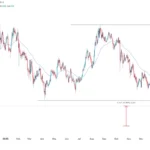





Bitcoin fell below $70,000 on June 2, 2026, trading near $69,200 at its lowest open since April. That is roughly 45 percent below the cycle high of $126,296 set on October 6, 2025.
Summary
- Bitcoin has fallen about 45% from its October 2025 cycle high, but the drawdown is still smaller than past full bear markets.
- The bear case rests on cycle history, weak on-chain valuation signals, treasury-company supply risk, and repeated failures to reclaim trend levels.
- The bull case rests on ETF capital, institutional demand, possible Fed easing, and the argument that the four-year cycle is breaking down.
- The most useful read may be that 2026 is a divergence year, where Bitcoin, AI-linked tokens, ETFs, and altcoins stop moving together.
The market has now printed three red monthly candles in a row, Bitcoin dominance has slipped under 60 percent, the Fear and Greed Index sits in extreme fear around 23 to 26, and the spot ETFs just bled their largest single-week outflow of the year. Search interest in “Bitcoin bear market” has spiked to a five-year high.
So the question everyone is typing into Google is fair: is the bull market over? The honest answer is that it depends on which framework you trust, and the frameworks disagree more sharply this cycle than in any before it. This piece lays out the bear case, the bull case, and the reason 2026 may not fit cleanly into either label.
Where the market actually is
Start with the facts, because the emotional temperature is running ahead of them.
Bitcoin hit an all-time high of $126,296 on October 6, 2025, with some data feeds marking the intraday peak as high as $128,198. From there it did not crash the way 2021 did. It cooled. Through late 2025 and into 2026 the price ground lower in a series of step-downs rather than a single waterfall, and as of June 2, 2026 it trades near $69,200, down roughly 45 percent from the top.
A 45 percent drawdown is severe by traditional-asset standards and ordinary by Bitcoin standards. In the 2021 cycle, Bitcoin fell about 78 percent from $69,000 to $15,476. In the cycles before that, drawdowns of 80 percent or more were the norm on the way to a true bear-market bottom. So the current decline, painful as it feels, is still shallower than what a full historical bear market has typically delivered.
The surrounding signals are genuinely mixed. Bitcoin dominance under 60 percent means capital is leaving Bitcoin without rotating cleanly into altcoins, which is unusual. The Fear and Greed Index in the low 20s reflects real panic. The crypto market as a whole is down to around $2.41 trillion and showing an 84 percent correlation with the Dow, which tells you this is a macro-driven selloff, not a crypto-specific implosion. And the ETF outflows, while record-setting in streak length, still represent a small fraction of the capital that came in. The data does not point to one obvious conclusion. It points to a market at a genuine crossroads.
The bear case
The argument that the bull market is over rests on cycle history, on-chain valuation, and a specific supply risk.
The four-year cycle is the foundation of the bear view. Bitcoin has historically moved in roughly four-year cycles tied to the halving, with a year or so of post-peak decline following each blow-off top. The April 2024 halving put the typical 12-to-18-month bullish window into late 2025 and early 2026. Under that model, the October 2025 peak was the top, and 2026 is the reset year. If the pattern holds, the market is now in the markdown phase that historically runs about a year and ends well below current levels.
The on-chain valuation metrics back this up. The MVRV Z-Score, which compares Bitcoin’s market value to its realized value to flag when price has stretched too far from cost basis, has flashed warnings consistent with a late-cycle top. Long-term moving averages tell a similar story. Analysts who watch the 50-week and 100-week moving averages treat a persistent break below them, combined with repeated failures to reclaim resistance, as a structural red flag. Some on-chain frameworks put the potential downside zone for this cycle at $40,000 to $80,000 before a new cycle begins, which would mean the current $69,000 is somewhere in the middle of the decline rather than near its end.
The supply risk is the newest and most cycle-specific worry. The market is now full of digital asset treasury companies, the Strategy copycats that loaded balance sheets with Bitcoin during the run-up. If those companies collectively begin selling into an already fragile market, the way Strategy just sold for the first time since 2022, the market may not be able to absorb that supply. A wave of treasury-company selling triggered by margin pressure or dividend obligations is the kind of reflexive shock that turns a correction into a bear market. The AI-equity bubble bursting is a second external catalyst analysts flag, since a tech-stock unwind would pull risk capital out of crypto at the same time.
Put together, the bear case is coherent: the cycle clock says reset, the valuation metrics say stretched, and there is a fresh supply overhang that no previous cycle had.
The bull case
The argument that this is a correction inside an ongoing bull market rests on institutional structure, the resilience of ETF capital, and the claim that the old cycle model is breaking down.
The institutional anchor is the strongest bull point. Spot Bitcoin ETFs control more than $100 billion in assets. Despite the sharp pullback from the 2025 peak, the cumulative outflows from those funds have stayed modest relative to everything that came in. The roughly $2.97 billion that left during the recent record streak is under 8 percent of the $36 billion the category absorbed in its first full year. That pattern, regulated capital holding through a drawdown rather than fleeing, is something no previous Bitcoin cycle had. It suggests a floor of long-term demand that did not exist in 2018 or 2022.
The macro setup could turn into a tailwind. Several major banks and brokerages entered 2026 with targets in the $120,000 to $150,000 range, with Grayscale and Bitwise expecting a new all-time high as macro liquidity improves and US and EU crypto rules stabilize. The thesis is that a Federal Reserve pivot away from tight policy, combined with regulatory clarity from frameworks like the CLARITY Act and MiCA, releases liquidity into risk assets. If the Fed signals rate cuts later in 2026, the same ETF infrastructure that is bleeding now becomes the channel through which fresh capital floods back.
The deepest bull argument is that the four-year cycle is dead. A growing number of analysts, including Coin Bureau’s Nic Puckrin, argue the halving-driven four-year model no longer fits a market dominated by institutions and ETFs rather than retail and miners. In this view, the forces that produced clean four-year cycles, miner selling pressure and retail mania, have been overwhelmed by structural institutional demand that does not operate on a halving clock. If the old model no longer applies, then the fact that “the cycle says 2026 is a bear year” carries much less weight, because the cycle itself may have stopped being predictive.
The bull case, in short: the buyers who matter most are still here, the macro could flip positive, and the historical pattern pointing to a bear market may no longer be the right map.
Why 2026 may not fit either label
The most useful read might be that the bull-or-bear question itself is the wrong frame for this cycle.
Several analysts have landed on a third view: 2026 is a year of divergence rather than a clean directional market. The idea, articulated by analysts like Grachev, is that Bitcoin will still drive the market, but the other assets may not follow the way they did in prior cycles. You can already see it in today’s tape. Bitcoin is bleeding while a handful of AI-linked tokens are posting double-digit gains. Dominance under 60 percent without a clean rotation into alts is exactly what a fragmenting market looks like. The single label “bull” or “bear” assumes everything moves together, and the defining feature of this cycle may be that things have stopped moving together.
This matters for how you interpret the current decline. In a classic cycle, a 45 percent drawdown with extreme fear and three red monthly candles would be strong evidence of a bear market beginning. In a divergent, institutionally-anchored market, the same data could just be a deep correction within a longer structural uptrend, with capital rotating between sectors rather than exiting entirely. The behavior of the market over the next few months, specifically whether ETF flows turn back positive and whether Bitcoin holds its longer-term moving averages, will reveal which interpretation is right. The labels lag the data.
What to actually watch
If you want to know which way this resolves without guessing, a few specific signals carry more weight than the daily price.
The 50-week and 100-week moving averages are the cleanest structural line. A persistent hold above them keeps the bull-market-correction interpretation alive. A decisive, sustained break below them, paired with failed attempts to reclaim resistance, is the red flag that analysts treat as confirmation of a deeper bear phase. This is a market-structure signal, not a daily-candle signal, so it takes weeks to confirm rather than hours.
The ETF flow trend matters more than any single price level. The funds turning from net outflows back to sustained net inflows would signal that institutional demand is reabsorbing the dip, which is the bull case in action. Continued, broadening outflows would signal the opposite. Watch the direction of the trend, not the size of any one day.
The treasury-company behavior is the cycle-specific wildcard. If digital asset treasuries beyond Strategy start selling Bitcoin in size to manage their balance sheets, that supply shock is the most likely trigger to convert this correction into a genuine bear market. If they hold, one of the bear case’s sharpest catalysts stays dormant.
The macro calendar is the external driver. Fed signaling on rate cuts, the path of the Middle East tensions weighing on risk assets, and whether the AI-equity trade holds its highs all feed directly into crypto given the 84 percent correlation with the Dow. Crypto is trading on macro right now, so the macro turns are what will move it.
So which is it?
Nobody knows yet, and anyone claiming certainty in either direction is overselling their framework.
The bear case is real and coherent. The four-year cycle says 2026 is a reset year, on-chain valuation metrics flag a late-cycle top, the drawdown has reached 45 percent, and there is a fresh treasury-company supply overhang that no prior cycle carried. If you weight cycle history and on-chain data heavily, the bull market looks finished and the market looks headed lower toward the $40,000 to $80,000 zone some analysts flag.
The bull case is equally real. Institutional ETF capital has held through the drawdown in a way no previous cycle saw, the macro could flip from headwind to tailwind on a Fed pivot, and the very cycle model that says “2026 is bearish” may no longer describe an institutionally-dominated market. If you weight structural demand and the death of the four-year cycle heavily, this is a deep correction inside a longer uptrend.
The most defensible position sits between them. This cycle has been different at every stage, a slow structural cooling rather than a 2021-style blow-off, and it may resolve as a year of divergence rather than a clean bull or bear. The current selloff is macro-driven, correlated with equities, and concentrated in large institutional reallocations rather than broad capitulation, which argues for correction over collapse. But the treasury-supply risk and the cycle clock are genuine threats that could tip it the other way.
For anyone trying to navigate it, the move is to stop asking for a label and start watching the signals that actually distinguish the two outcomes: the long-term moving averages, the ETF flow direction, treasury-company selling, and the Fed. Those will tell you what the cycle is doing before any headline confidently declares the bull market alive or dead. Right now, the only honest description is that the market is at a real crossroads, and the data has not yet chosen a direction.
This article is for informational purposes and does not constitute financial or investment advice. Cryptocurrency markets are highly volatile. The figures and analysis described reflect data available as of June 2, 2026. Always do your own research and consult with qualified financial professionals before making investment decisions.